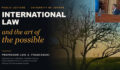
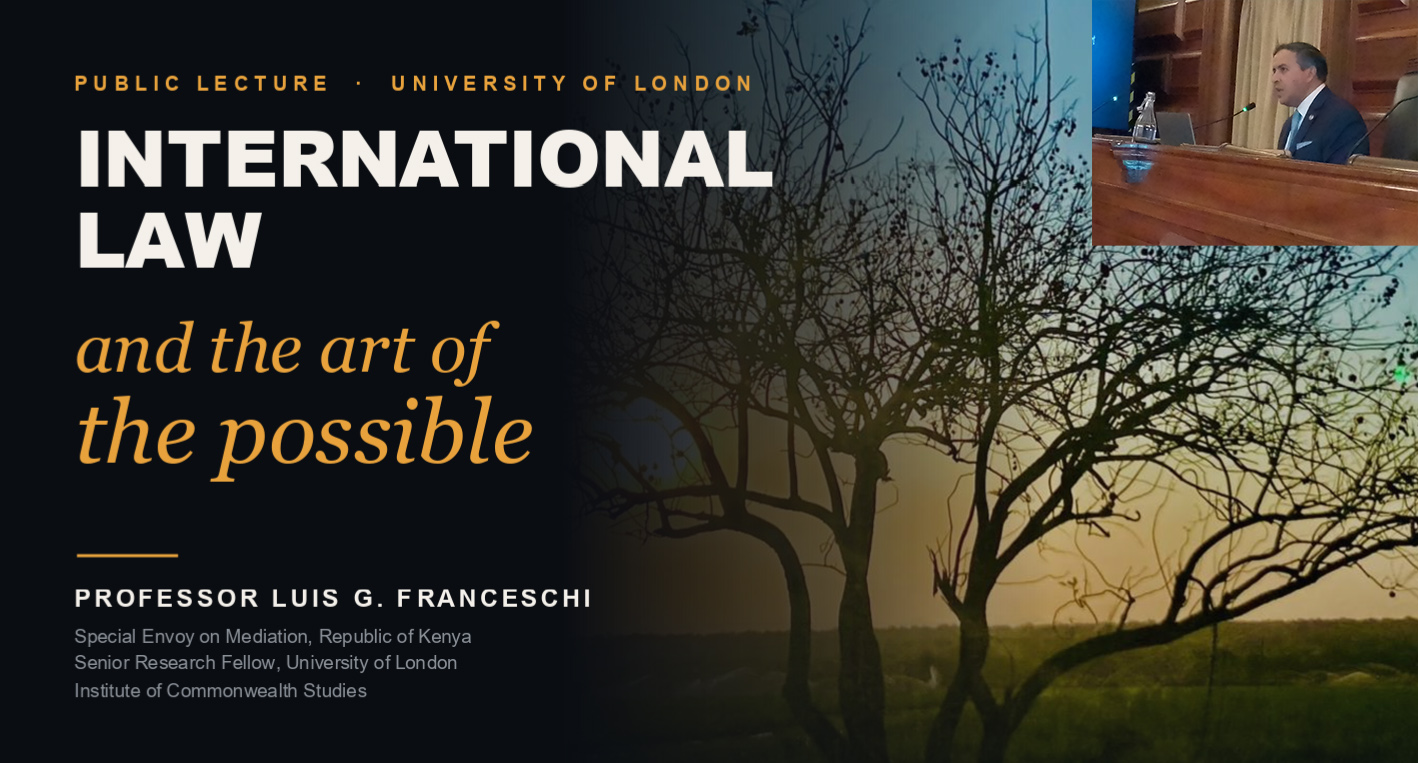
 [slide courtesy Luis Franceshsi. Inset photo by Debbie Ransome]
As global leaders try to find new paths in a world of dwindling attention to multilateral values, the Commonwealth’s immediate past Assistant Secretary General (ASG), Luis Franceschi, laid out a stark perspective of where global power sits today and some suggestions on how the Commonwealth can make a difference.
His lecture/ discussion on International Law and the Art of the Possible took place at the University of London’s Senate House on 30 September. Since leaving the Commonwealth Secretariat (ComSec) in April, Prof. Franceschi has been appointed Kenya’s first Special Envoy on Mediation by President William Ruto. He also returned to his academic roots, currently serving as a senior research fellow at the Institute of Commonwealth Studies (ICwS). His ICwS profile states that he draws on his ‘years of practice in peacebuilding, Commonwealth diplomacy, and Constitutional Law’.
A packed Senate Room at ICwS, including diplomats, international law professors and students, Commonwealth staffers and Commonwealth associated organisation members, listened to the lecture and then took part in a post-presentation Q&A session on a future path for the Commonwealth in today’s world.
Prof. Franceschi’s lecture, wrapped around a PowerPoint presentation, outlined examples of his role in making diplomatic interventions into key political and legal developments in Commonwealth member countries during his time at the Secretariat. His examples from his 2020-2026 term were delivered under Chatham House rules, giving his audience an insight into the behind-the-scenes work the Commonwealth has been doing to pull politicians and countries back from the brink of post-electoral chaos and political showdowns and towards reaching peace agreements which had, at the time, seemed almost impossible.
“The Commonwealth is perceived as that friend who can always get you out of trouble,” Prof Franceschi told his audience as he related examples of phone calls made by politicians facing national meltdown.
“Powerful men from powerful countries”
His slideshow broke down the challenges of the modern world. Under the title ‘Threats’, he spoke about power without restraint, algorithms without a face and diplomacy without friendship opportunities. Under the title ‘Opportunities’, he listed the Commonwealth’s assets, including the potential of middle powers as bridges, networks of trust and a generation under 30. Other Commonwealth advantages included what he described as “windows of opportunity” which the organisation’s officials use to reach agreements.
In the part of his presentation on ‘Power’, Prof. Franceschi looked at the problems caused by the world’s most powerful rulers and those he called the most influential and richest AI power CEOs who could circumvent traditional global rules. He pointed out that “presidents and prime ministers are nowadays using communication through social media means”, circumventing the traditional checks and balances of former norms and networks.
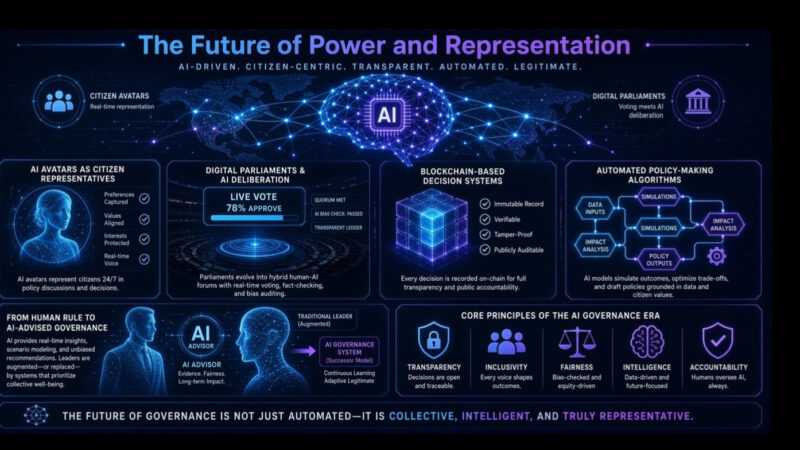
[AI slide courtesy of Luis Franceschi]
The PowerPoint graph drawing the most attention from his audience dealt with the future of power and representation. Prof. Franceschi said that the trend of phones moving more money than banks in some countries had become a trend in governance. He spoke of a possible future with “no need of representation”. Talking about how polarisation can take place, he said that it was now possible to create a society “basically being driven by emotions”.
In the face of such global shifts, he said that “the only power the Commonwealth really has is friendship”.
No treaty, no army, no veto
Prof. Franceschi outlined why soft power and diplomacy are important in the Commonwealth family as the organisation of 56 nations had no power to enforce change. He reminded his audience that the Commonwealth had no army, no treaty and no veto. Even its expulsion power only worked for major developments such as a coup d’etat. He also said that Commonwealth officials were constantly mindful of the impact expulsion from the organisation could have on the people of a member country.
His approach to the use of international law fell on the side of the human face of the legal system – “diplomacy with a human face”, as he called it. Prof. Franceschi described Commonwealth sessions bringing together judges, prisoners, prison officers and legal officials. On the outside, people might question why the Commonwealth had spent money on such events. From the inside, he explained, one such event had “put the human face” into future decisions by Commonwealth judges.
He also shed a light on the behind-the-scenes pre-election work of the Commonwealth achieving peace deals in an atmosphere of media space issues, opposition politicians under threat and questions on campaign financing looming. There was also a role for the Commonwealth in post-election scenarios as results were questioned and opposition politicians refused to concede. Prof. Franceschi described this role as the “quiet intervention” which was not always made public.
The Commonwealth and AI’s potential
In the Q&A session, Commonwealth accredited organisation representatives and Prof Franceschi discussed future options for the organisation. The main questions tackled ways to deal with core aims on climate, AI, reparations, development and rights. He said that a key resource for the Commonwealth, beyond friendship, was its youth and he explained the growing focus on Commonwealth youth events. Some audience members questioned the restraints and low-profile nature of the Secretariat and raised the potential of its negotiating arm, the Commonwealth Ministerial Action Group (CMAG). The former Commonwealth ASG explained how ComSec officials often pushed on ways to say something more meaningful in statements. He said officials dealt with the delicate balance of making a difference but not appearing weak when faced with challenges to its core values. On his “friendship with a purpose” theme, Prof. Franceschi said that the Commonwealth could not compete with the United Nations, the World Trade Organisation or the UN’s Human Rights network. He described the Commonwealth’s role as sometimes being about “mates talking”.
As a former Commonwealth Heads of Government Meeting (CHOGM) Conference Secretary, he suggested that a key takeaway that the upcoming CHOGM in Antigua could achieve would be to put together “a coalition of the good” to advise on the future use of artificial intelligence (AI).
“The Commonwealth could be such a force for AI,” Prof. Franceschi said. He added that the membership of the Commonwealth included huge AI players, such as India, Singapore, the United Kingdom and Malaysia. He described the possibility of setting up a Commonwealth-powered group, including Canada, as an “incredible opportunity for the Commonwealth” to explore the best uses of AI on ways to tackle climate, trade and rights issues.
“It could be so powerful”, he said.
Debbie Ransome is the Web Editor for The Commonwealth Round Table.
Related articles:
The global challenges facing the Commonwealth
The Commonwealth and the challenges facing multilateralism
Out of every crisis, an opportunity. Enter the Commonwealth?