 [source: World Bank]
[This is an excerpt from an article in The Round Table: The Commonwealth Journal of International Affairs and Policy Studies.]
Implications for policymakers
The foregoing analysis highlights persistent gender disparities across multiple economic indicators in the Commonwealth. While progress has been made in health and education, significant gaps remain in economic participation, enterprise ownership, board representation and wage equality. Addressing these issues requires a coordinated and sustained policy response that is both inclusive and evidence driven. To do so, policymakers must focus on changes that are inclusive and measurable.
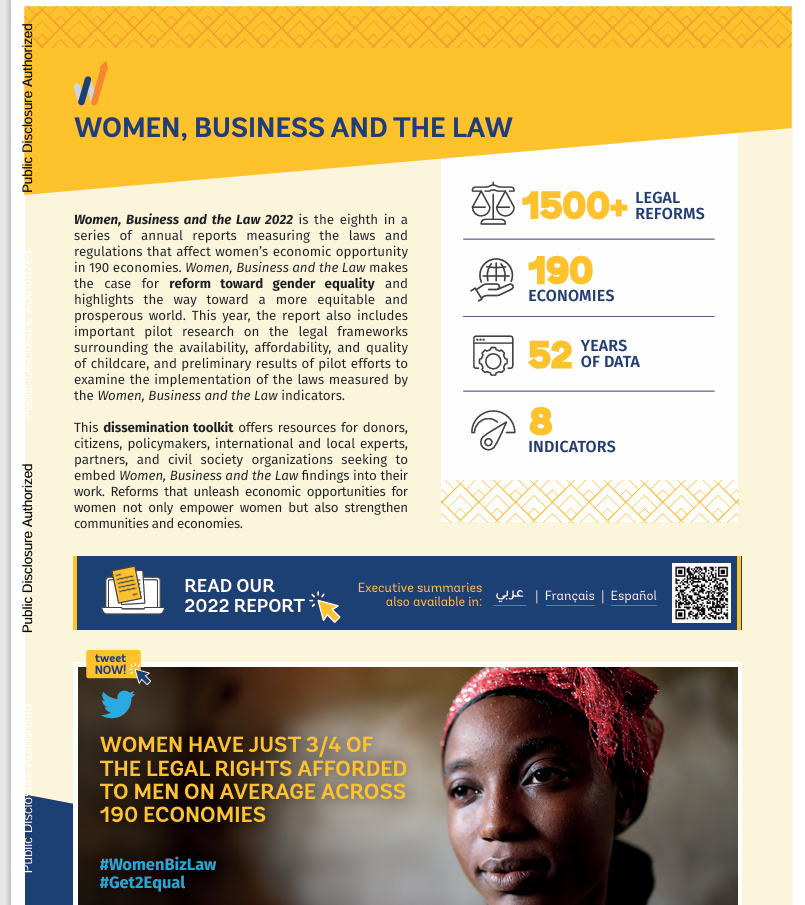
There is an urgent need for strong legal and regulatory reforms in the Commonwealth. Many Commonwealth countries still lack basic laws on women’s mobility, economic rights or access to justice. While some have aligned regulations with international frameworks such as the Women, Business and the Law indicators, the reforms that support gender parity have been limited. To support the aim of gender equality it is important that there is legal parity across employment, finance, entrepreneurship and property rights. Further, governments need to invest in ensuring that gender-related laws are accessible and enforceable in the informal economy. This must be complemented by awareness-raising, legal aid, and stronger oversight mechanisms to ensure compliance. National regulatory bodies with gender equality mandates can play an important role in ensuring gender equality.
SDGs and the Commonwealth
Achieving the Promise to Leave No Girl behind in Commonwealth Countries
Improving access to training and workforce development especially for women is needed. Countries that have invested in staff training, namely digital and technical skills, demonstrate a positive impact on wage equality and managerial representation. But women, especially in lower-income countries, do not benefit as much as in higher-income countries. To address this, governments could consider incentivising firms to adopt gender-targeted training through tax reliefs, subsidies, and/or public–private partnerships. In addition, education systems must provide digital skills training, as this will allow young women to enter high-growth sectors such as ICT. For women entrepreneurs, access to finance is a critical barrier. In many Commonwealth countries, women-owned businesses are mostly prevalent in low-growth sectors. To ensure women participate in higher growth sectors, governments must promote collateral-free lending schemes and credit guarantees, and provide women with access to business support services. Improving women’s representation in corporate leadership and governance is another area that requires attention given that the representation of women on corporate boards remains low across most Commonwealth countries.
Conclusion
This article presents trends and patterns of gender inequality in economic participation across the Commonwealth countries for the period 2008–2023. While some progress has been made in health, education and legal reform, there is evidence of disparities in terms of wage equality, leadership access, digital inclusion and workforce training. These gaps are evident in low-income Commonwealth countries, which highlights the need to initiate reforms to support women’s economic empowerment. We find that legal frameworks in combination with training and digital access improves gender outcomes. This suggests that gender equality requires an integrated approach such that policies are interlinked with SDGs 5 and 8 to ensure that the empowerment programmes are sustainable. There is a lack of disaggregated data by gender, and this is often an issue faced in many Commonwealth countries as these do not publish gender-disaggregated economic statistics for designing effective policies. It is important to mention that addressing gender inequality in the Commonwealth requires a concerted effort, but if it is backed by political will and an institutional framework, gender parity will not be simply a dream for many women in the years to come.
Sangeeta Khorana, International Trade Policy and Endowed Chair of Chartered Institute of Export and Trade, Aston Business School, Aston and Santiago Caram, Bournemouth University Business School, Bournemouth University, Poole.