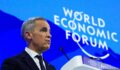
 Commonwealth Secretary-General Shirley Botchwey at the Patsy Robertson Memorial Lecture. [photo: Lucy Baker [email protected]]
Listening to Sir Ronald Sanders’ magisterial lecture in July, on the life and legacy of Sir Shridath Ramphal, it was hard not to think with sympathy of our new Commonwealth Secretary-General, H E Shirley Botchwey. Her challenge now, to revive and breathe more useful life into the political Commonwealth, looks enormous when compared to the task on which Sonny embarked at his election in 1975.
Sir Ronald was a member of the Eminent Persons Group chaired by Tun Abdullah Ahmad Badawi of Malaysia and drafted its report of 2011. In his July address to the Commonwealth Association at Marlborough House he argued that one of its most valuable proposals was to extend ‘the retreat’ of Commonwealth leaders attending a Heads of Government Meeting (CHOGM ) to two days. This would allow them to discuss global challenges without officials, and only the Secretary-General present.
Yet at Samoa last year only a minority of Commonwealth leaders attended, and some from the most powerful member countries were absent. Whereas Ramphal could get to know long-serving leaders like Lee Kuan Yew and Kenneth Kaunda, Shirley Botchwey will have the greatest difficulty in establishing personal rapport with more than half of the 56 current presidents and prime ministers, given their number and the electoral turnover.
When Ramphal took office in 1975 he brought a lot of personal fire power with him. As Foreign Minister of Guyana he had chaired a meeting of Foreign Ministers of the Non-Aligned Movement in Georgetown three years earlier. In February 1975, the crucial Lomé Convention – between the African, Caribbean and Pacific group of states and the European Economic Community – was signed. Ramphal, as Caribbean spokesman, had been critical to the diplomacy beforehand; precipitated in part when Britain joined the EEC, the convention provided protection for Commonwealth and other developing states.
Equally important, the Commonwealth Secretariat was ambitious and expanding its operations when Ramphal arrived. Arnold Smith, his modest and highly capable Canadian predecessor, provided administrative foundations on which Ramphal would build. One of the most significant was the Commonwealth Fund for Technical Development, founded in 1973, and for a long time in receipt of generous Canadian funding. The late Patsy Robertson remarked with only slight exaggeration, ‘Whenever Arnold went to a meeting he would come back with the money to start a new division or project for the Secretariat!’
Now the situation is adverse. Multilateralism, aid budgets and contributions to all international organisations are being cut back. Its budget is compressed, and the Secretariat has largely pulled out of education and health. The Commonwealth is an optional tool for governments. It needs the coaxing of a Secretary-General and a fair wind from a range of active member states to play a serious role for its members and in global diplomacy. Above all it needs the involvement of powerful members. Who could imagine that change in Southern Africa in the last century would have happened if the Commonwealth had been dismissed and stereotyped as just an association of small states?
Trade and investment in the Commonwealth: at an inflection point?
Out of every crisis, an opportunity. Enter the Commonwealth?
Samoa 2024 proves CHOGM’s continuing relevance
Meet the Commonwealth Secretary-General candidates
For the new Secretary-General, therefore, this is a recovery situation, where not too much is expected and the graph of achievement can only climb, if modestly. Shirley Botchwey arrives with the support of the large African caucus, and her own not inconsiderable experience. A carefully focused strategy, building on Commonwealth knowledge and achievements, could offer a way forward.
The two obvious areas to work on go back at least to Sonny’s era: combating the climate catastrophe and underpinning genuine development for people in the Commonwealth’s poorer states. Africa, Botchwey’s support base, is in the frontline of poverty and of global warming, with food insecurity and low-lying cities vulnerable to sea level rise such as Lagos and Dar es Salaam.
Internationally the COP process is reaching a dead end, with a lack of accountability and hopelessly conflicted governments hosting these giant festivals of talk. President Lula, with Brazil the next chair of COP, is simultaneously trying to halt deforestation in the Amazon while developing oilfields at its mouth. At a recent Round Table discussion Mark Malloch Brown argued that it is time to replace COP with a more effective instrument.
In the development area too, it is time for the Commonwealth to promote new ways forward. The 1990s, when Commonwealth Finance Ministers led the way in debt write off, are long ago. Now once again it is Wall Street companies and China and other international lenders that are ripping off governments and poor countries, which face unsustainable debt. Commonwealth Finance Ministers and CHOGM leaders can find ways of breaking the chains that hurt the poorest Commonwealth citizens.
The Commonwealth must resume its role for carefully-planned, well-calibrated campaigning. This requires clear thinking, and support from governments, civil society and the media. It takes time.
Richard Bourne is an emeritus member of the Round Table editorial board.