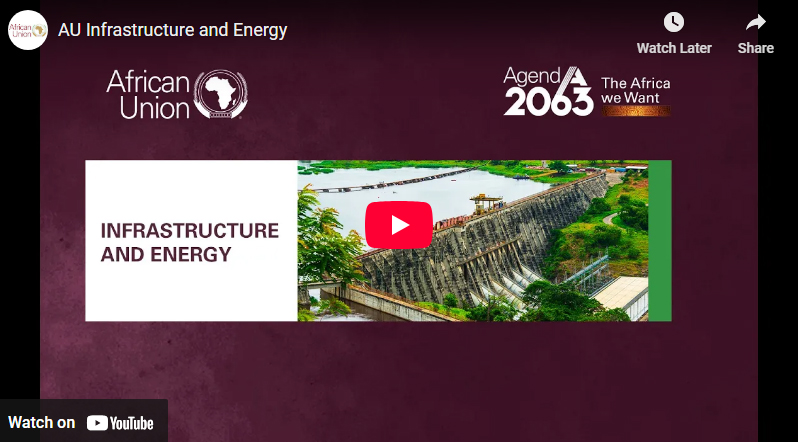
 The African Union Agenda 2063 strategy website and video. [source: African Union)
[This is an excerpt from an article in The Round Table: The Commonwealth Journal of International Affairs and Policy Studies.]
Challenges, contradictions, and future trajectories
As African states increasingly assert themselves on the global stage, longstanding partnerships with institutions such as the Commonwealth, the OIF and the CPLP are being re-evaluated. These multilateral platforms offer both opportunities and limitations: while they serve as channels for influence and recognition, they also reflect persistent hierarchies and uneven power dynamics. Understanding the tensions within Africa’s multilateral engagement – between symbolism and substance, unity and diversity, inclusion and marginalisation – is essential to assessing whether these institutions can meaningfully support the continent’s evolving ambitions.
Despite increased African participation and long-standing calls for reform, Britain, France, and Portugal continue to wield disproportionate institutional, financial, and symbolic authority over the Commonwealth, the OIF and the CPLP, respectively.Footnote1 Leadership appointments, agenda-setting powers and budgetary contributions remain heavily concentrated in these founding states. This entrenched asymmetry limits the potential for genuine structural transformation and undermines efforts to re-orient these organisations towards more equitable and multipolar models of governance. As a result, there is often a disjuncture between rhetorical commitments to inclusivity and the persistence of inherited power dynamics, raising questions about the depth and direction of reform.
At the same time, a broader geopolitical realignment is underway. Many countries in the Global South, including those in Africa, are increasingly diversifying their diplomatic and economic partnerships beyond legacy, Western-dominated institutions. While these organisations retain symbolic and functional relevance, new platforms like BRICS are gaining traction. BRICS promotes a vision of multipolarity and South – South cooperation, often seen as an alternative to the liberal international order established after World War II. These platforms are seen as offering less conditional and more inclusive avenues for infrastructure development, financial support and political alignment, challenging the dominance of Western norms and frameworks.
Gabon and Togo join the Commonwealth
Trade and investment in the Commonwealth: at an inflection point?
This shift reflects growing dissatisfaction with multilateral structures perceived as overly prescriptive or slow to reform (Bhattacharya, Citation2024). Emerging coalitions like BRICS are attractive not only for their material benefits – such as access to the New Development Bank – but also for the political space they offer to contest entrenched hierarchies in global governance. As a result, many African states are maintaining ties with older institutions for symbolic or strategic purposes, while deepening relations with emerging blocs that promise a more balanced and responsive global order.
Nevertheless, Africa’s engagement with multilateralism is neither uniform nor without tension. While shared priorities exist – such as climate resilience, debt restructuring and equitable access to global markets – African states differ widely in their political systems, foreign policy orientations and historical affiliations. These differences shape how countries engage with both traditional and emerging multilateral platforms. The AU has increasingly acted as a continental anchor, advancing common positions in areas such as democratic governance, peacebuilding and regional trade. Its frameworks often overlap with those of the Commonwealth, OIF and CPLP, enhancing Africa’s collective leverage in global diplomacy.
Still, civil society actors – including advocacy networks, think tanks, and professional associations – remain marginal in many multilateral processes, despite their crucial role in promoting accountability, transparency and policy innovation. These contradictions are particularly visible in the gap between the values promoted by institutions like the Commonwealth and the realities of their membership. While states such as Zimbabwe have faced suspension or scrutiny over democratic deficits, several current members continue to operate under authoritarian conditions or face credible accusations of human rights violations – yet remain active within the organisation (Pursuit, Citation2022). This uneven application of standards raises difficult questions about the Commonwealth’s consistency and credibility as a values-based institution. As legacy organisations attempt to adapt to shifting global dynamics, they must grapple with how to uphold normative commitments while remaining politically relevant and inclusive.
Conclusion
The expanding African membership in language-based multilateral organisations underscores the continent’s rising economic and political influence, reshaping global governance and contributing to a more multipolar world.
Tighisti Amare and Alex Vines, Chatham House.