
[This is an excerpt from an article in The Round Table: The Commonwealth Journal of International Affairs and Policy Studies.]
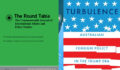
While the ‘frontline’ chapters demonstrate the regional priorities of Trump 2, the point in terms of the book’s overall argument is to show how these priorities relate to Australia. In relation to Europe the implications for Australia are implicit rather than being spelt out explicitly: the path for Australia not to follow, allowing for the exception of the UK, if Australian relations with the US are to be prioritised. In the case of the Middle East Fernandes show that Australia has followed the US line on Israel, with criticisms of Israel during the post-2023 Gaza tragedy being relatively mild.
In relation to China, Fernandes brings out well the way in which Australia uses its naval deployments close to China to support the US as a ‘loyal ally’. There is an ambiguity in the Law of the Sea about naval deployments in exclusive economic zones (EEZs). China and many other countries dispute the legitimacy of such deployments, whereas the US and Australia adhere to the position that freedom of navigation is an absolute right. In sending naval vessels into Australia’s EEZ in recent times, China has no doubt been making a point.
The analysis of the Trump era in international relations and Australia’s role therein is particularly strong in relation to explaining the relevant political economy and military developments. The author also has a succinct way of conveying his historical explanations (‘pithy’, according to eminent Australian historian, Geoffrey Blainey, who would generally not share Fernandes’s political perspective). Sometimes the interpretations might be too pithy; for example, the ANZUS Treaty of 1951 might have entailed some element of providing protection for Australia in the event of Australian forces being deployed to the Middle East as part of British strategic planning at the time (pp. 75–76), but the usually accepted argument is that ANZUS was a quid pro quo for Australia (and New Zealand) accepting a ‘soft’ peace treaty with Japan in the context of the US wanting to ensure that Japan was an ally in the Cold War.
Should the Commonwealth worry about Trump 2.0?
Shock to strategy: Trump’s tariffs and trade conflict in South Asian Commonwealth countries
In interpreting Australia’s international role in the Trump era, Chapter 5 on AUKUS is a key chapter. Focusing on the ‘strategic logic’, Fernandes shows that AUKUS is consistent with Australia behaving as the ‘loyal ally’, identifying with and encouraging the US in its strategy of maintaining dominance vis-à-vis China. As far as the issue of obtaining nuclear-powered submarines is concerned, Australia would be far better off according to the author by opting for Air-Independent Propulsion submarines, with 20 such submarines obtainable for AUD 30 billion (USD 20 billion) (pp. 122–124) (compared with a projected AUD 368 billion [USD 240 billion] under the AUKUS plan, with three to five Virginia class submarines in the early 2030s, followed by five specifically AUKUS submarines built with the UK from the 2040s). Fernandes refers to the doubts arising from the US being so far behind target with its goals for producing submarines for itself, let alone Australia. With upgrading of the submarine facilities at the Australian naval base south of Perth, a likely fallback position is that US submarines will use these facilities from the early 2030s, perhaps with some Australian crew. Such an arrangement would facilitate US forward deployment in the Indo-Pacific, all part of the strategic contest with China; development of Australian defence facilities in northern Australia, including the potential for use by long-range US bombers, is also part of this strategy.
At the end of the book, the author raises an intriguing point about Australia becoming a ‘multi-origin society’, with cultural diversity posing challenges to social cohesion (pp. 154–155). If Australia becomes involved in conflicts involving the homelands of diasporas located in Australia, there could be considerable domestic tensions in Australia.
Given the size of the Chinese Australian community the most serious challenge would arise in the event of Australia becoming involved in a conflict with China. This is a major issue but requires more extended analysis. The next book?
Derek McDougall is with the School of Social and Political Sciences, University of Melbourne.
Turbulence: Australian foreign policy in the Trump Era by Clinton Fernandes, Carlton, Vic, Melbourne University Press, 2025.